The History of Blackjack
Long before the green felt and shoe games of the modern Las Vegas Strip, blackjack lived in 17th-century French card rooms under a different name. Here is how 21 traveled from the salons of Paris to the most-dealt game on every casino floor in the world — and what every dealer in training should know about it.
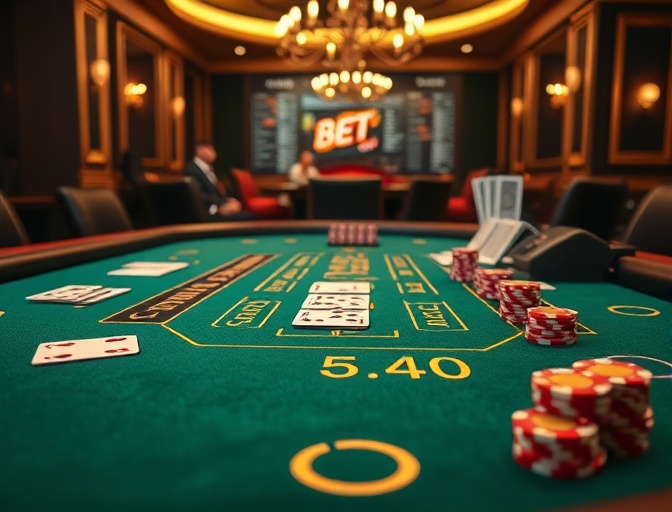
French Origins — Vingt-et-Un
Most card historians trace the earliest recognizable form of blackjack to France in the 1600s, where it was called Vingt-et-Un — literally "Twenty-One." The game was popular in the private salons of Parisian aristocrats and shared a family resemblance with two earlier French card games, Chemin de Fer and French Ferme. The objective was already familiar: get closer to 21 than the dealer without going over.
Vingt-et-Un differed in important ways from the modern game. Only the dealer could double down, betting rounds were spread between deals, and the dealer enjoyed broader discretion than today's strictly-coded house rules allow. But the bones of the game — totals, naturals, and the dealer-versus-player structure — were already in place.
Crossing the Atlantic — New Orleans, 1820
Vingt-et-Un crossed the Atlantic with French colonists and surfaced in New Orleans in the early 1800s. By 1820, the city's legal gambling halls were spreading the game alongside faro and poker. New Orleans was the proving ground for nearly every casino game that would later define the American casino floor, and Vingt-et-Un was no exception.
One of the most colorful figures in the game's American history was Eleanor Dumont, a French-born dealer who arrived in the United States as a young woman and became one of the country's first prominent female gambling-hall operators. She opened a card room in Nevada City, California in 1854 called Vingt-et-Un, where she dealt the game herself. Players reportedly came as much to lose to "Madame Mustache" as to play — a useful early lesson in how a strong dealer becomes part of the draw of a casino.
How "21" Became "Blackjack"
When Nevada legalized gambling in 1931, casinos needed to attract players to a game that, despite a long history, was still a relative latecomer to the American floor. A common promotional bonus paid 10-to-1 on a hand consisting of the Ace of spades plus either black jack — the Jack of clubs or the Jack of spades. The hand was called a "blackjack," and the name stuck even after the special bonus was retired.
From there, the modern rules we know today — the 3:2 natural payout, the dealer's fixed hit-and-stand thresholds, and standardized hand signals for surveillance — were layered in over the following decades. By the time the Las Vegas Strip became the global center of casino gaming in the 1950s and 60s, blackjack had become the most-dealt game in every major property.
Why Blackjack Became the Universal First Game
Blackjack's dominance on the modern casino floor is partly an accident of math and partly a function of how it teaches early-career dealers. The game has the lowest learning curve of any major table game, the cleanest set of dealer rules, and a payout structure that scales naturally from $5 minimums to high-limit pits. Almost every Strip dealer's first audition is a blackjack audition.
That's why blackjack is the standard starting game in the Game Setters curriculum. It builds the chip-handling, hand-signal discipline, and game-protection awareness that every other table game on the floor depends on.
From Vingt-et-Un to Your First Audition
The history of blackjack is the history of casino dealing itself — French salon games turned into American gambling halls turned into the regulated, surveilled, protocol-driven casino floor of modern Las Vegas. Every dealer who steps onto that floor today is the latest entry in a 400-year line that runs back to the salons of 17th-century Paris.
At Game Setters, students learn to deal blackjack at a regulation table under one-on-one coaching from Eric Sanchez, who designed and ran the dealer training program at the Venetian and Palazzo. The 25-hour course covers chip cutting, hand signals, splits and doubles, insurance, and game protection — every skill a Strip property tests on day one.
About Game Setters
Game Setters is a Las Vegas casino dealer training school owned and operated by Eric Sanchez, a 30-year casino industry veteran and the former dealer training program designer for the Venetian and Palazzo on the Strip. We train early-career dealers, experienced dealers, supervisors, and players on regulation tables in a hands-on, one-on-one format.
Our blackjack course is a standard entry point for early-career dealers and pairs naturally with carnival poker variants for inventory expansion. View the full Blackjack Dealer Training page or browse the complete Table Games hub for the full curriculum.
Learn to Deal Blackjack at Game Setters
Master the most-dealt game on the Las Vegas Strip with hands-on training from a 30-year industry veteran. The blackjack course is $300 and runs approximately 25 hours.